

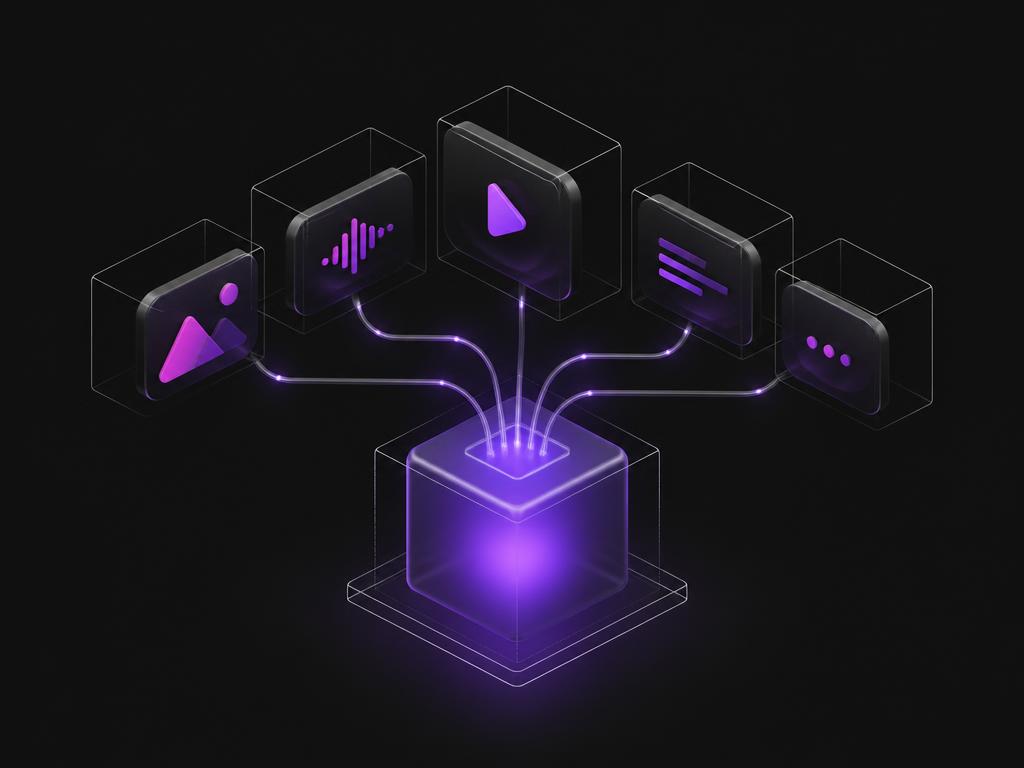
Ingestion
- Direct upload ingestion.
- Resumable upload ingestion.
- URL-based ingestion.
- Cloud-storage ingestion.
Placeholder quote: our teams finally work from one content record instead of stitching spreadsheets, drives, and delivery tools together every week.
Highlight 1 of 4
The problem
Libraries grow faster than the systems around them. Teams stitch together ingestion, processing, delivery, and audience tooling, then spend their time maintaining the seams instead of the work.
Content moves through separate tools, each with its own conventions, so context is re-created at every step.
Operational state lives in different places, which makes it hard to see where a piece of content actually is.
The same metadata, permissions, and delivery rules are rebuilt for each surface rather than defined once.
The lifecycle
The capabilities below are drawn from the verified capability record. Each stage hands off to the next inside the same platform.
Connected platform
Bring material into one place through direct, resumable, URL, and cloud-storage ingestion, then let AI-assisted processing prepare it for use.
Viewer identity and viewer experience capabilities share the same foundation as the library, so browsing, playback, and progress stay consistent.
HLS streaming, direct delivery, and MRSS syndication publish from the same catalog rather than from parallel copies of it.
Publisher Feed APIs and media-lifecycle webhooks let your systems observe and extend the platform instead of working around it.
For your teams
Directional positioning for evaluation conversations, not measured results.
Product evidence
Product visuals are held until approved media is available. Nothing on this page represents a real interface.
For developers
The developer surface is documented and versioned. Start with the published documentation, then wire your systems to the feed APIs and lifecycle webhooks.
Next step
A strategy demo walks through the lifecycle against your library, your delivery targets, and your integration surface.